OODA DEV
Agency Training Assessment and Consultation Services
Agency Training Assessment and Consultation Services
Effective training is not defined by volume—it is defined by relevance, consistency, and performance under real-world conditions. Our Agency Training Assessment & Consulting Services are designed to assist law enforcement agencies in evaluating, refining, and strengthening their training programs, operational procedures, and performance standards across patrol and specialized units.
This service provides a comprehensive, objective review of current training practices and policies, followed by actionable recommendations and structured implementation strategies aligned with modern threat environments, legal standards, and operational realities.
We recognize that agencies operate within real-world budget constraints, where training resources must be allocated carefully and justified at every level. However, inadequate, outdated, or inconsistent training often carries a far greater cost—one measured in civil liability, litigation exposure, operational failures, and preventable risk to both officers and the public.
Well-structured, relevant training—grounded in current best practices, legal updates, and real-world application—serves as a risk mitigation strategy, not just a line item. Agencies that invest in efficient, purposeful training programs position themselves to reduce liability exposure, improve decision-making in critical incidents, and enhance overall operational effectiveness.
This service is designed to help agencies maximize the return on their training investment—ensuring that time, resources, and effort translate directly into measurable performance, defensible actions, and improved outcomes in the field.
PURPOSE
To ensure your agency’s training, tactics, and policies:
- Reflect current real-world threats and operational demands
- Produce measurable, repeatable performance under stress
- Align with legal standards, case law, and defensible decision-making
- Promote officer safety, accountability, and effectiveness
- Maintain consistency across personnel, shifts, and units
ASSESSMENT APPROACH
Our process is structured, collaborative, and mission-focused:
1. Program Evaluation
- Review of existing training curriculum and lesson plans
- Analysis of qualification standards and performance metrics
- Evaluation of frequency, relevance, and training methodology
- Identification of capability gaps and redundancies
2. Policy & SOP Review
- Examination of departmental policies and standard operating procedures
- Alignment with current legal standards and best practices
- Identification of ambiguity, conflict, or operational inefficiencies
- Ensuring policies support real-world application—not just compliance
3. Operational Observation (Optional / Recommended)
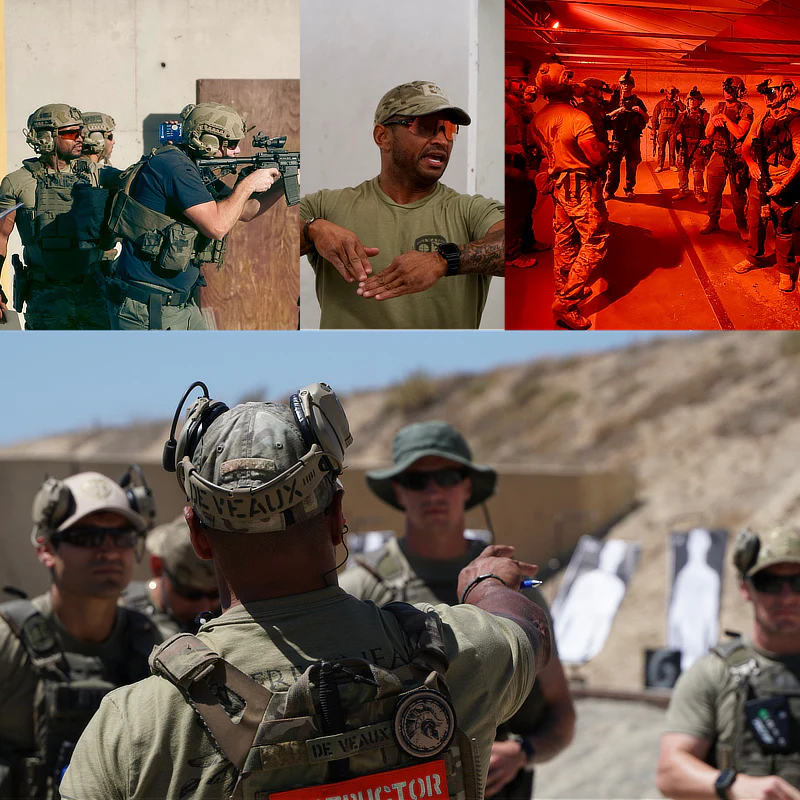
- Observation of live or scheduled training evolutions
- Assessment of instructor delivery and student performance
- Evaluation of team dynamics, communication, and execution
- Identification of breakdown points under stress
4. Findings & Recommendations
- Detailed report outlining strengths, vulnerabilities, and risk areas
- Prioritized recommendations for immediate and long-term improvement
- Clear, actionable steps for implementation
5. Implementation Support (Optional)
- Assistance with curriculum redesign and SOP development
- Instructor development and train-the-trainer support
- Ongoing advisory for program sustainment and evolution
CORE AREAS OF FOCUS
SWAT / SPECIALIZED UNIT TRAINING
- Team tactics and close quarters operations
- Firearms proficiency, sustainment, and qualification standards
- Multi-officer coordination and high-risk response capability
- Scenario-based validation and performance benchmarking
PATROL FIREARMS TRAINING
- Duty handgun and rifle standards
- Qualification course design and scoring criteria
- Bridging the gap between qualification and real-world application
- Accountability for accuracy, decision-making, and round placement
PATROL TACTICS
- Pedestrian and vehicle stop procedures
- Contact and cover principles under evolving threat conditions
- Residential and commercial structure response (CQC principles)
- Solo officer response considerations and limitations
ACTIVE THREAT / MASS CASUALTY RESPONSE
- Immediate response protocols and priorities
- Multi-officer and multi-agency coordination
- Movement to threat vs. containment decision-making
- Integration of medical response and casualty management
- Communication and command considerations in chaotic environments
MINDSET & SITUATIONAL AWARENESS
- Cognitive processing and decision-making under stress
- Threat recognition and behavioral indicators
- Managing cognitive load and information flow
- Developing a proactive vs. reactive operational mindset
DE-ESCALATION & USE OF FORCE
- Integration of communication, presence, and tactics
- Decision-making within use-of-force frameworks
- Balancing officer safety with legal and ethical considerations
- Articulation of actions before, during, and after incidents
SOP & POLICY DEVELOPMENT
- Creation or refinement of operational procedures
- Alignment between policy, training, and field application
- Reducing ambiguity in high-liability situations
- Ensuring policies are practical, executable, and defensible
DELIVERABLES
Agencies receive:
- Comprehensive Assessment Report
- Identified Gaps & Risk Areas
- Prioritized Improvement Plan
- Updated / Recommended SOP Language (if applicable)
- Training Program Enhancement Recommendations
WHY THIS MATTERS
Training that is outdated, inconsistent, or disconnected from real-world application creates:
- Increased liability
- Decreased officer confidence and performance
- Gaps in critical incident response
- Misalignment between policy and practice
Our goal is to ensure your agency is not simply checking training boxes, but building capable, confident, and accountable professionals prepared for the realities they face.
WHO THIS SERVICE IS FOR
- Law enforcement agencies seeking program modernization
- Departments preparing for policy or training audits
- Agencies experiencing performance gaps or inconsistencies
- Command staff looking to align training with operational priorities
- Units preparing for high-risk mission profiles or capability expansion
END STATE
Your agency will have:
- Clear, defensible training standards
- Aligned policies and operational procedures
- Improved officer performance and confidence
- A sustainable framework for continued development
Clarity in Training. Confidence in Execution. Accountability in Action.
Share